 +91 9846992789
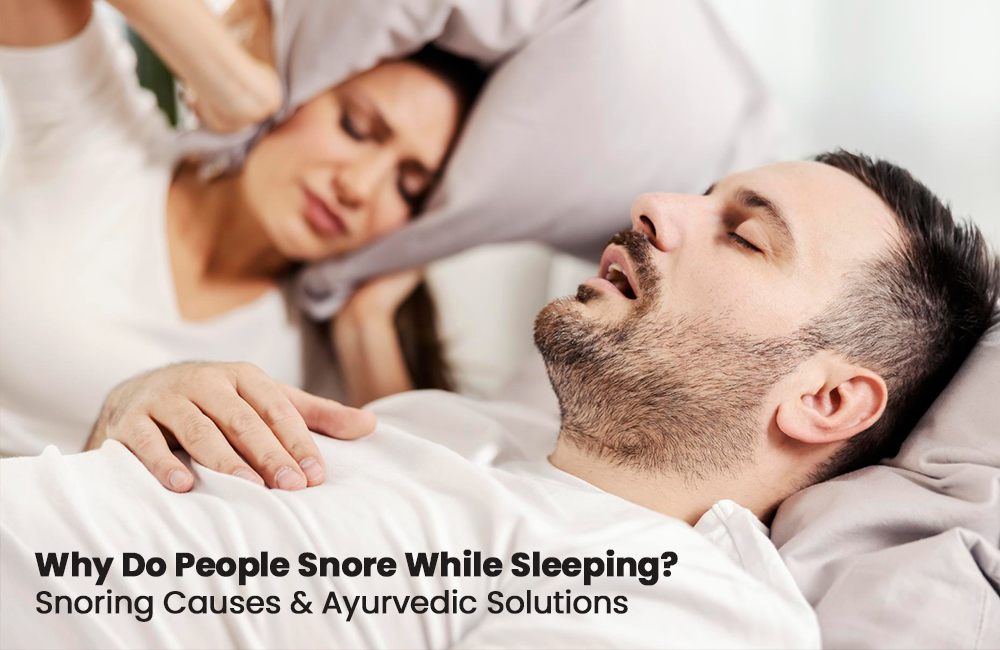
Imagine you had finished watching a horror movie with your partner and went to sleep. Your partner fell asleep fast and you were unable to sleep because of fear. You close your eyes, trying to sleep under the blanket. The silence was so loud that you could hear your own breathing. Thump! You hear a sudden sound next to you and get out of bed screaming. Then you come to your senses and realise that the sound was nothing but snoring of your partner. This would make a good comedy scene in a movie. But in real life? Not appreciated.
Snoring is more common than most people think and can become a concern. Fortunately ayurvedic treatment in Kerala can help.
What Is Snoring?
Snoring while sleeping is the rumbling sound caused by the tissues in your throat and airways vibrating when you breathe during sleep. It often occurs when airway is partially obstructed by factors like throat muscle relaxation, excess weight, nasal congestion, or the natural anatomy of the mouth and sinuses. Statistics show that roughly 45% of adults snore occasionally, while 25% snore regularly. Snoring is a symptom of an underlying issue and not a disease. It is often harmless, but it can be the symptom of a serious medical disorder like obstructive sleep apnea (OSA).
Why Do People Snore? The Top Causes of Snoring
We have discussed snoring and now let’s see why do people snore.
Blocked Nasal Airways
Blocked nasal airways are the most common snoring causes. Allergies, sinus infections or a deviated septum can narrow airflow through the nose. When air struggles to pass through restricted airways, it causes vibrations in the throat tissues, leading to snoring.
Poor Muscle Tone in the Throat and Tongue
During deep sleep, the muscles of the throat and tongue naturally relax. Alcohol, sedatives, and certain medications can relax these muscles even more. As the tongue falls backward and partially blocks the airway, breathing becomes turbulent, creating the sound of snoring.
Obesity and Excess Weight
Fat deposits around the neck can put pressure on the airways and reduce airflow during sleep. When the breathing passage gets narrow, it causes snoring and this is one of the modern causes of snoring.
Sleep Position (Sleeping on the Back)
Sleeping on the back can cause snoring because gravity pulls the tongue and soft palate backwards towards the throat. This partially blocks the airways and causes tissue to vibrate. Changing the sleep position can reduce snoring in this case.
Elongated Uvula or Soft Palate
Some people naturally have a long uvula or soft palate, which narrows the airways. These tissues vibrate more as air passes through them during breathing. This is among other snoring causes.
Alcohol and Sedative Use
Consuming alcohol or sedatives before bedtime relaxes the throat muscles. This increases airway collapse during sleep and significantly worsens snoring.
Age-Related Changes
As people age, throat muscles lose strength and elasticity. This natural weakening increases the likelihood of airway narrowing and vibration during sleep, making snoring more common in older adults.
Sleep Apnea (Serious Cause)
In some cases, snoring may be a warning sign of obstructive sleep apnea, a condition where breathing repeatedly stops and starts during sleep. Loud snoring accompanied by choking, gasping, daytime fatigue, or poor sleep quality should not be ignored.
Knowing why do people snore helps you take the necessary treatment for it.
Health Risks of Ignoring Snoring
Snoring creates sleep deprivation for both the snorer and your partner. The snorer loses sleep due to interrupted rest from restricted airflow while the partner loses sleep due to loud snoring noise.
Daytime fatigue, low concentration and irritability are signs of obstructive sleep apnea (OSA). If snoring is loud or chronic, it indicates that your airway is narrowing or blocking during sleep.
Sleep apnea causes oxygen deprivation in the blood and in response the brain releases stress hormones. This increases blood pressure and the heart rate. Strain from fluctuating oxygen levels and blood pressure can damage the cardiovascular system.
Snoring is the most common symptom of Obstructive Sleep Apnea (OSA), and it occurs when the throat muscles vibrate when air passes through the partially narrow airway.
Ayurvedic Solutions for Snoring
As we discussed snoring causes and health risks, let’s discuss some snoring problem solutions.
Nasya Therapy (Nasal Oil Administration)
Nasya therapy involves the gentle administration of medicated oils through the nostrils. This helps clear excess Kapha from the nasal passages, supporting smoother airflow and reducing nasal congestion that may contribute to snoring.
Panchakarma Detoxification
Ayurvedic treatment for snoring includes Panchakarma, a traditional Ayurvedic cleansing approach aimed at removing accumulated toxins, known as Ama, from the body. Panchakarma is often recommended to manage snoring and sleep-related discomfort.
Herbal Formulations
Ayurveda uses a variety of herbs traditionally associated with balancing Kapha and supporting respiratory comfort. The herbs that help to stop snoring include Trikatu, Tulsi, and Ashwagandha.
Dietary and Lifestyle Adjustments (Dinacharya)
Ayurveda emphasizes daily routines, known as Dinacharya, to maintain balance and healthy sleep patterns. Avoiding heavy late-night meals, reducing dairy, cold foods, and excess sugar, and following a consistent sleep schedule may reduce Kapha-related congestion and improve sleep quality.
Yoga and Pranayama for Snoring
Breathing exercises and yoga practices are often recommended to support relaxation and respiratory function. Practices like Anulom Vilom (alternate nostril breathing), Bhramari (humming bee breath), and Simhasana are traditionally practiced to support throat strength, breathing control, and airway wellness.
Gargling with Medicated Decoctions
Traditional Ayurvedic practices such as Kavala (oil pulling) and herbal gargling are used to maintain oral and throat hygiene. These practices are believed to reduce mucus buildup and support throat muscle tone as part of a broader wellness routine for snoring management.
When to Seek Professional Ayurvedic Help for Snoring?
If you snore loudly every night, consider seeking professional help. Frequently waking up gasping for breath or with a dry throat indicates the need for a professional consultation. Ask your partner if they notice a pause in breathing during sleep. Even if you get a full night’s sleep, you may experience excessive sleepiness or chronic brain fog during the day. Headaches in the morning are also serious signs to notice.
Snoring while sleeping is common among people but there is a strong need to monitor it closely because it may lead to serious issues. Understanding the causes and health risks of snoring helps you get treatment when it is required. Ayurvedic treatment methods are effective in treating snoring and it is crucial to know when to seek medical expertise.
Don’t worry if your partner’s snoring trouble you, come to Omshree, the best ayurvedic hospital in Kerala.

Dr. Susme M.J. is a BAMS-qualified Ayurvedic physician at OmShree Sidha Hospital, continuing the hospital’s four-generation legacy of Siddha and Ayurveda treatment rooted in Kottayam, Kerala.